
Weekly Food Post
27 September 2026
Món Ăn Đặc Biệt
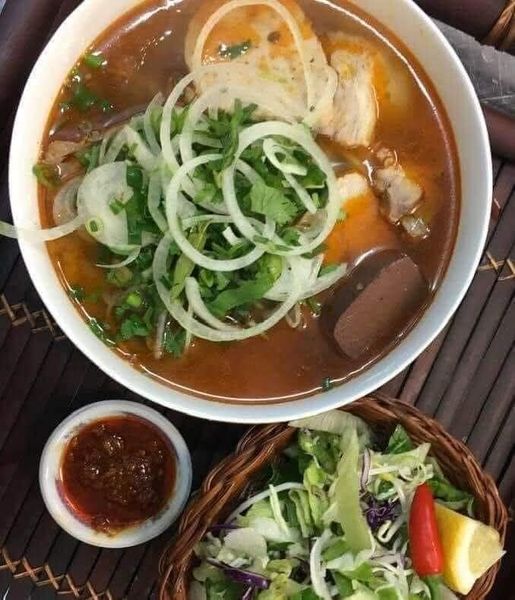
Bún Bò Huế
Is a traditional Vietnamese noodle soup that originated in Huế, the former imperial capital of Vietnam. Its history is closely tied to the royal kitchens and the culinary identity of central Vietnam.
🏯 Imperial Origins
Huế was home to the Nguyễn Dynasty (1802–1945), and its cuisine became known for being refined, balanced, and deeply flavorful. Many dishes from Huế were created or perfected in royal kitchens, where chefs focused on aroma, presentation, and complexity.
Bún bò Huế is believed to have evolved from these traditions, combining beef, pork, lemongrass, and fermented shrimp paste (mắm ruốc)—ingredients typical of central Vietnam.
🍜 Evolution of the Dish
Originally, the dish was called “bún bò” in Huế, but locals often referred to it as “bún bò giò heo” because of the signature pork hock. Outside Huế, people added “Huế” to the name to distinguish it from southern-style beef noodle soups.
Key elements that shaped its identity:
– Mắm ruốc Huế → gives the broth its signature depth and aroma
– Lemongrass → creates the warm, fragrant base
– Spicy chili saté → reflects the central region’s love for heat
– Thick round noodles → different from the thin noodles used in phở
🌏 Spread Across Vietnam and the World
As people migrated from central Vietnam to Saigon and abroad, the dish spread and adapted.
– In Southern Vietnam, the broth became sweeter.
– In Northern Vietnam, the flavor became lighter.
Overseas, many restaurants adjust the spice level and mắm ruốc to suit local tastes.
Despite variations, the true Huế version remains known for being bold, spicy, aromatic, and deeply savory.